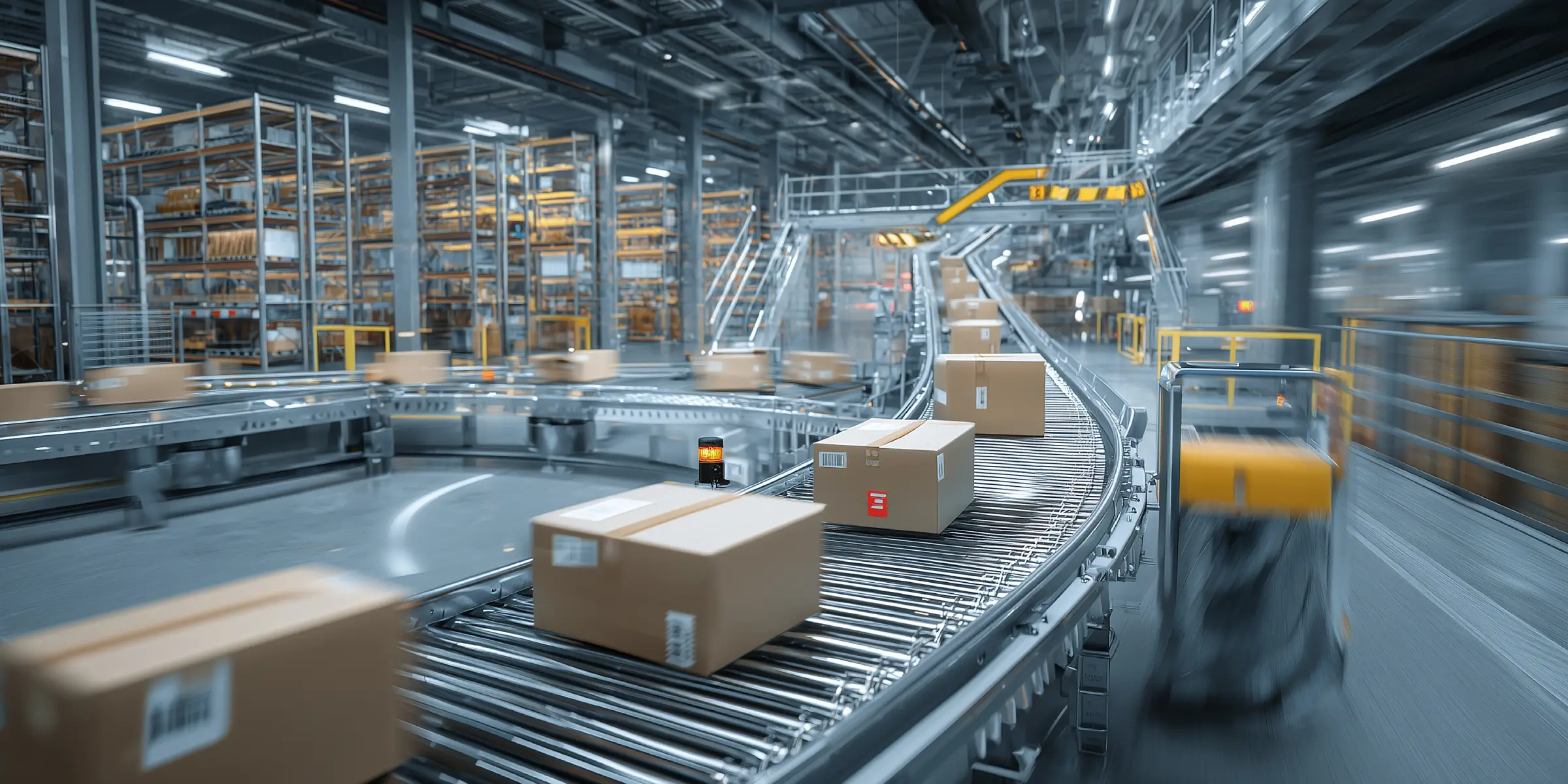
A globally scalable AI orchestration layer for end-to-end logistics automation, proven in production across 70 country organizations.
Many business-critical logistics processes at Rhenus were still handled manually. Booking requests, pre-shipment information, carrier confirmations, and invoices were primarily received via email - either in individual operator inboxes or shared mailboxes.
Incoming emails and attachments were manually reviewed, interpreted, and transferred into the central Transport Management System (TMS). All process steps were executed manually by operators - from data entry and status updates to confirmations and communication with customers and carriers.
Documents were also manually downloaded, uploaded to the TMS, assigned to shipments, and versioned. Any updates or additional documents required repeated manual handling. These manual workflows created operational overhead, media breaks between email and core systems, and limited scalability when volumes increased.
At the same time, Rhenus operates in a complex IT landscape with existing TMS, ERP, and legacy systems that must remain in place. A full replacement of these systems was not feasible. The objective was therefore to integrate AI-driven automation directly into existing processes and enable scalable workflow orchestration across the current enterprise landscape.
The goal was to build a globally scalable AI Workflow Platform to automate logistics processes and integrate existing systems. The solution needed to operate across regions worldwide while supporting local process variations.
The platform was designed to serve as an orchestration layer for end-to-end logistics processes rather than automating isolated use cases. It needed to handle high volumes, support different process variants, and allow continuous extension.
Since Rhenus operates globally, the solution had to be highly available and production-ready. A stable 24/7 operation, including monitoring, maintenance, and continuous improvement, was essential. At the same time, centralized governance with regional flexibility was required.
Another key objective was economically efficient automation. AI was applied where it delivered clear value. In other scenarios, alternative approaches such as static mapping or rule-based logic were used to reduce complexity and accelerate implementation. The focus was always on maximizing business value, achieving fast ROI, and optimizing Total Cost of Ownership.
NEOZO implemented a global AI Workflow Platform to orchestrate AI-driven logistics processes. The platform combines ready-to-use workflows with customer-specific AI nodes and integrates directly into Outlook, TMS, and ERP systems.
Incoming emails and attachments are processed automatically. Relevant data is extracted using AI and presented in an Outlook plugin for human-in-the-loop validation. After approval, the information is transferred to the central Transport Management System, including document upload and versioning.
The platform orchestrates end-to-end processes across existing systems and enables automation of pre-shipment workflows, carrier updates, and invoice processing. Its modular architecture allows flexible extension with additional workflows and AI nodes.
The solution was rolled out globally and is operated in a production-grade 24/7 environment.
Captures pre-shipment data from emails and attachments using AI. Extracted information is presented in an Outlook plugin for validation and then transferred to the central TMS. Documents are automatically uploaded and assigned to shipments.
Automates air freight pre-shipment processing. Data is extracted from emails and documents, reviewed in Outlook, and transferred to the TMS including document upload and assignment.
Processes carrier booking confirmations. Data is extracted from emails and attachments using AI or static mapping logic. After validation, booking updates are applied in the TMS and documents are versioned automatically.
Automates creditor and debtor invoice processing. Invoice data is extracted using AI/SLM models, validated, and transferred into TMS and ERP systems. Documents are automatically stored and linked.
These custom nodes enable deep integration into existing logistics workflows and automate previously manual operational tasks.
The solution is based on the NEOZO AI Workflow Platform and a modular, open architecture. The platform primarily leverages open-source technologies to ensure flexibility, scalability, and cost efficiency.
Different technologies are evaluated per use case and selected based on business value, ROI, and total cost of ownership. AI is applied only where it delivers clear benefits. In other scenarios, static mapping, rule-based logic, or traditional software components are used.
The platform integrates Outlook, TMS, ERP, and legacy systems and supports human-in-the-loop validation. AI agents handle extraction, structuring, and system updates. The platform is centrally operated and supports global governance with local extensions.
The global AI Workflow Platform automated previously manual logistics workflows and enabled scalable operations across regions. The solution was rolled out to up to 70 country organizations and is operated 24/7 in production.
Email-based booking processes are now processed automatically, data is AI-extracted and transferred into the central TMS, and documents are uploaded, versioned, and assigned automatically. Carrier updates and invoice processing are also automated.
The platform significantly reduces manual effort, improves data quality, and accelerates operational processes while enabling global standardization with local flexibility.
Together with Rhenus, NEOZO implemented a global AI Workflow Platform including standard workflows and customer-specific nodes, rolled out across up to 70 country organizations and operated 24/7 in production.
Captures pre-shipment data from emails and attachments using AI. The extracted information is presented within an Outlook plugin for human-in-the-loop review. After validation, the data is transferred to the central custom-built Transport Management System (TMS), including automatic upload of all related attachments.
Automates the capture of air freight pre-shipment data from emails and attachments. Extracted information is displayed in an Outlook plugin, reviewed by users, and transferred to the central Transport Management System including document upload.
Extracts carrier booking confirmations from emails and attachments. The node routes data either through an AI extraction pipeline or static mapping logic. Results are presented in an Outlook plugin for review and then transferred to the Transport Management System, including attachment upload linked to the booking confirmation.
Automated capture of creditor and debtor invoices using an SLM-based extraction approach. The workflow includes human-in-the-loop validation and automatic storage of invoice data and attachments in both TMS and ERP systems.
These customized nodes demonstrate how the NEOZO AI Workflow Platform integrates deeply into existing logistics environments and enables automation across Outlook, legacy systems, and central TMS/ERP platforms.
Learn MoreReady to transform your enterprise operations? Let's discuss how NEOZO can help you achieve your automation goals.